
Neodymium magnets and ferrite magnets are two of the most widely used permanent magnets. Both can provide stable magnetic performance, but they are designed for different needs. Neodymium magnets are known for their very strong magnetic force in a compact size, while ferrite magnets are valued for their low cost, corrosion resistance, and good stability in many environments.
For customers, engineers, buyers, and product designers, the best magnet is not always the strongest one. The right choice depends on magnetic strength, budget, product size, working temperature, corrosion risk, service life, and the actual application.
What Are Neodymium Magnets?
Neodymium magnets, also called NdFeB magnets or rare earth magnets, are made mainly from neodymium, iron, and boron. They are among the strongest permanent magnets available for commercial and industrial use.
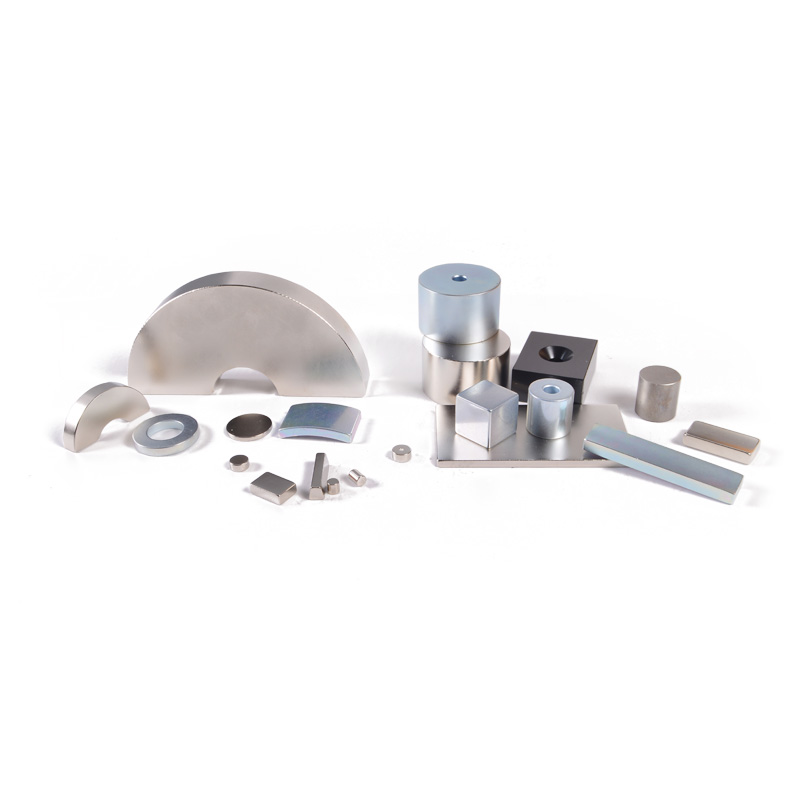
The main advantage of neodymium magnets is their high magnetic energy in a small volume. In many designs, a small neodymium magnet can replace a much larger ferrite magnet while still providing strong holding force or magnetic performance.
Because of this, neodymium magnets are often used when compact size, high efficiency, and strong magnetic force are important.
Common applications include:
Electric motors
Generators
Sensors
Magnetic couplings
Magnetic separators
Holding magnets
Automotive components
Headphones and speakers
Medical devices
Precision instruments
Magnetic tools and fixtures
However, neodymium magnets also have limitations. They are usually more expensive than ferrite magnets, more sensitive to corrosion, and can lose magnetic performance if used above their rated temperature. Since they contain iron, they normally require protective coatings such as nickel, zinc, epoxy, or rubber.
What Are Ferrite Magnets?
Ferrite magnets, also known as ceramic magnets, are made from iron oxide combined with barium or strontium compounds. They are hard, brittle, and widely used in low-cost permanent magnet applications.
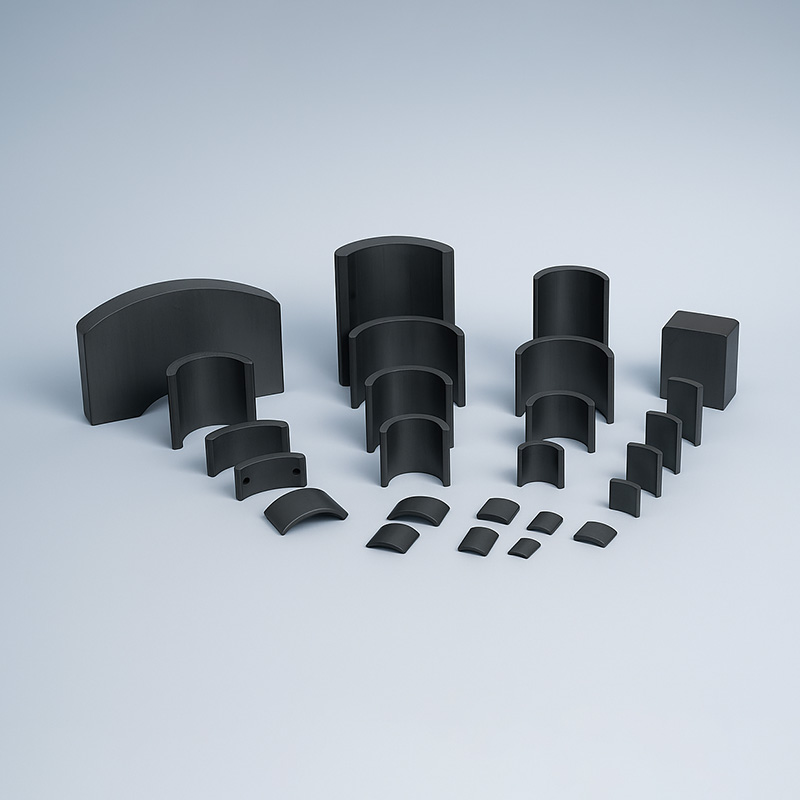
Ferrite magnets are not as strong as neodymium magnets, but they offer excellent cost performance for many simple and large-volume applications. They also have good corrosion resistance and usually do not need extra surface coating.
Common applications include:
Loudspeakers
Refrigerator magnets
Magnetic strips
DC motors
Holding magnets
Door catches
Educational magnets
Craft magnets
Magnetic boards
Automotive parts
Industrial magnetic assemblies
Ferrite magnets are a practical choice when the application does not require extremely high magnetic strength or a very compact design.
Main Differences Between Neodymium and Ferrite Magnets
The difference between neodymium magnets and ferrite magnets can be understood through several key factors: strength, cost, size, corrosion resistance, temperature performance, and application environment.
Comparison Item | Neodymium Magnets | Ferrite Magnets |
Magnet Type | Rare earth magnet | Ceramic magnet |
Magnetic Strength | Very high | Moderate |
Size Efficiency | Strong force in a small size | Larger size needed for similar force |
Cost | Higher | Lower |
Corrosion Resistance | Needs protective coating | Naturally corrosion resistant |
Temperature Performance | Depends on grade; high-temp grades cost more | Generally good high-temperature stability |
Machining | Brittle but suitable for small precision parts | Very brittle and harder to machine precisely |
Best For | Compact, high-performance designs | Cost-sensitive and large-volume applications |
Typical Uses | Motors, sensors, electronics, magnetic tools | Speakers, strips, crafts, simple holding |
Magnetic Strength and Size
Neodymium magnets are much stronger than ferrite magnets of the same size. This is the biggest reason customers choose neodymium.
When a design needs strong magnetic force in a small space, neodymium magnets are usually the better option. They can help reduce the size and weight of the whole product. This is important for compact motors, sensors, headphones, mobile devices, automotive speakers, and high-performance equipment.
Ferrite magnets are weaker, but they can still work very well when space is not limited. If the product can accept a larger magnet, ferrite magnets may provide enough performance at a much lower cost.
In simple terms:
Choose neodymium magnets when space is limited and strong magnetic force is required. Choose ferrite magnets when there is enough space and cost control is more important.
Cost and Value
Ferrite magnets are generally much cheaper than neodymium magnets. For price-sensitive products or high-volume production, ferrite is often the preferred choice.
For example, refrigerator magnets, simple holding magnets, magnetic strips, educational magnets, and many low-cost speakers often use ferrite magnets because the required magnetic force is moderate and the budget is important.
Neodymium magnets have a higher material cost, but they may reduce the total system cost in some designs. Because they are stronger, they can make the product smaller, lighter, and more efficient. In applications such as continuous-use motors, compact devices, and high-efficiency systems, the higher initial cost may be justified by better performance and lower lifecycle energy cost.
This means the buying decision should not only compare magnet price. Customers should also consider product size, efficiency, installation space, and long-term operating cost.
Corrosion Resistance
Ferrite magnets have strong corrosion resistance and usually do not require coating. This makes them suitable for humid, outdoor, or chemically exposed environments.
Neodymium magnets are more sensitive to corrosion because they contain iron. If the coating is damaged or the magnet is used in a wet environment, rust may appear over time. For this reason, neodymium magnets are commonly supplied with protective coatings such as nickel-copper-nickel, zinc, epoxy, or rubber.
For outdoor or humid environments, ferrite magnets are often safer and more economical. If strong magnetic force is required in such environments, coated neodymium magnets can still be used, but the coating type must be selected carefully.
Temperature Performance
Temperature is another important factor when choosing between neodymium and ferrite magnets.
Ferrite magnets generally have better high-temperature stability and a higher Curie temperature than standard neodymium magnets. This makes ferrite a good option for applications exposed to heat, such as some motors, speakers, and industrial equipment.
Neodymium magnets are available in different grades. Standard grades may lose performance if used above their rated temperature, while high-temperature grades can handle higher working temperatures but usually cost more.
Before choosing a magnet, customers should confirm:
Maximum working temperature
Exposure time at high temperature
Whether the magnet will face demagnetizing fields
Whether high-temperature neodymium grades are needed
If heat resistance is more important than compact size, ferrite magnets may be the better choice.
Resistance to Demagnetization
Neodymium magnets have strong coercivity, meaning they resist demagnetization very well under normal conditions. This is useful in high-performance motors, magnetic couplings, and compact magnetic systems.
Ferrite magnets also have good resistance to demagnetization and are stable in many common applications. They are reliable for simple holding, speakers, low-cost motors, and magnetic products.
However, both magnet types can be affected by extreme temperature, strong opposing magnetic fields, or improper use. The correct grade and design should always be selected according to the working environment.
Machining and Product Design
Both neodymium and ferrite magnets are brittle and can chip or break under impact or mechanical stress. They should not be treated like ordinary metal parts.
Neodymium magnets are brittle, but they are often easier to manufacture into small precision parts than ferrite magnets. Ferrite magnets are more brittle and can be more difficult to machine when small or complex shapes are required.
For very small or highly precise parts, neodymium magnets may offer better design flexibility. For simple shapes and large-volume production, ferrite magnets are usually more economical.
Neodymium vs Ferrite Magnets for Speakers
Both neodymium and ferrite magnets can be used in speakers. The better choice depends on speaker size, space, weight, cost, and acoustic design.
Ferrite magnets are widely used in traditional speakers because they are economical and stable. Large home speakers, low-cost speakers, and some stationary audio systems often use ferrite magnets.
Neodymium magnets are often used when the speaker needs to be smaller, lighter, or more compact. For example, mobile phones, headphones, earbuds, automotive speakers, and portable speakers often benefit from neodymium magnets because they provide strong magnetic performance in limited space.
For customers, this means there is no single “best” speaker magnet. A well-designed ferrite speaker can perform very well, and a well-designed neodymium speaker can also provide excellent sound in a smaller package.
Neodymium vs Ferrite Magnets for Motors
Motors are another area where both magnet types may be used.
Ferrite magnets are suitable for many low-cost DC motors and applications where size and efficiency are not the most important factors. They are economical and stable for simple motor designs.
Neodymium magnets are often preferred in compact or high-efficiency motors. Because they produce stronger magnetic fields, they can help reduce motor size and improve performance. For continuous-use motors, such as fans, compressors, electric drives, and high-efficiency systems, neodymium magnets may help reduce energy consumption over time.
If a motor runs only occasionally, ferrite may be enough. If a motor runs for many hours per day, neodymium may provide better lifecycle value because efficiency becomes more important.
Common Applications of Neodymium Magnets
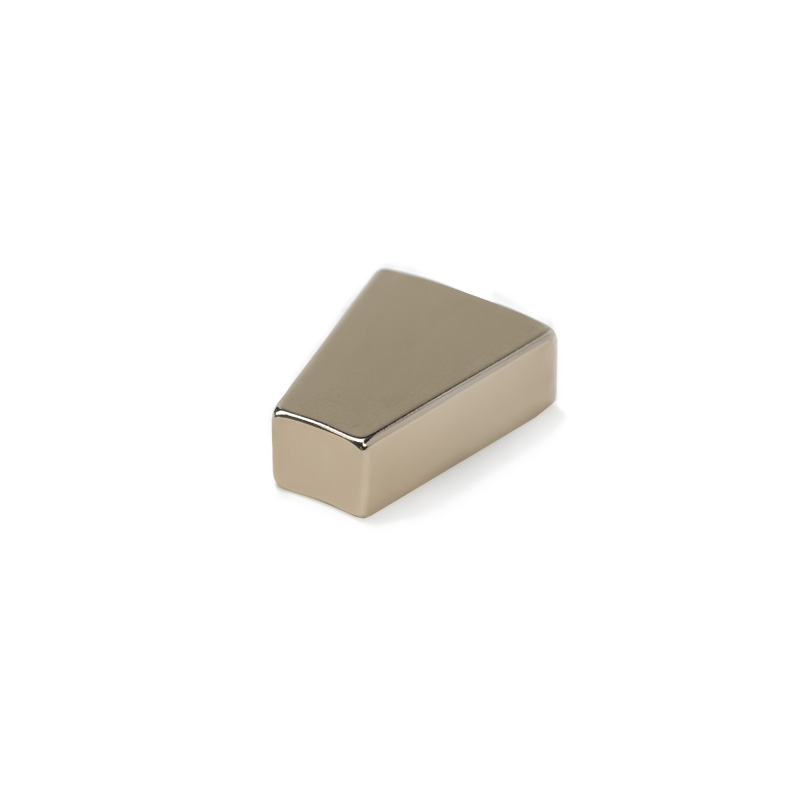
Neodymium magnets are suitable for applications that require strong magnetic force, compact size, or high performance.
Typical uses include:
Compact Motors and Generators
Neodymium magnets help motors and generators produce higher torque or power in a smaller size.
Sensors and Electronics
Small neodymium magnets are used in sensors, switches, headphones, mobile devices, and precision electronic products.
Magnetic Holding and Fixtures
Neodymium magnets are suitable for magnetic hooks, tool holders, mounting systems, fixtures, and compact holding devices.
Automotive and Industrial Systems
They are used in automotive components, traction motors, magnetic separators, magnetic couplings, and high-performance equipment.
Common Applications of Ferrite Magnets
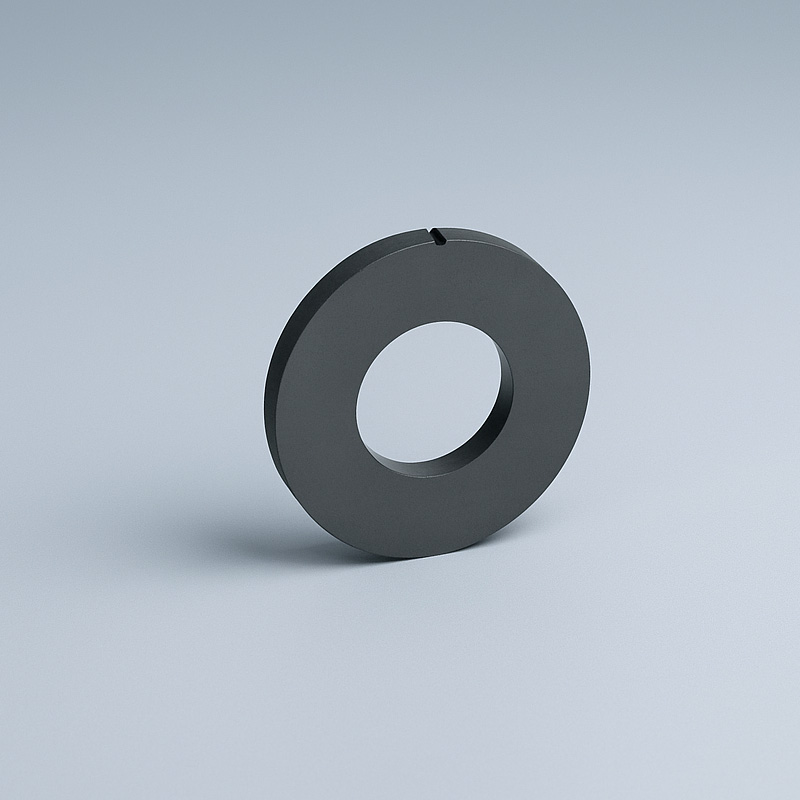
Ferrite magnets are suitable for economical, stable, and large-volume applications.
Typical uses include:
Speakers and Audio Products
Ferrite magnets are widely used in speakers because they are affordable and stable.
Magnetic Strips and Refrigerator Magnets
Flexible magnetic strips, fridge magnets, and magnetic boards often use ferrite materials.
Low-Cost Motors
Ferrite magnets are common in DC motors and simple motor systems where moderate magnetic performance is enough.
Crafts, Education, and Simple Holding
Ferrite magnets are often used in toys, craft products, school experiments, door catches, and basic holding applications.
How to Choose the Right Magnet
When choosing between neodymium magnets and ferrite magnets, customers should consider the following questions:
How much magnetic force is required?
How much space is available?
What is the budget?
Will the magnet be used indoors or outdoors?
Is the environment humid or corrosive?
What is the working temperature?
Is the product used occasionally or continuously?
Is weight reduction important?
Is the magnet part of a motor, speaker, sensor, or holding system?
Choose Neodymium Magnets If:
You need the strongest magnetic force
The product has limited space
A compact and lightweight design is important
The application requires high efficiency
The magnet is used in motors, sensors, electronics, or precision devices
You can accept a higher magnet cost
A suitable coating can be used for corrosion protection
The system benefits from reduced size or reduced energy consumption
Choose Ferrite Magnets If:
You need a low-cost magnet
The application does not need very high magnetic strength
There is enough space for a larger magnet
The magnet will be used in humid or outdoor environments
Corrosion resistance is important
The product is simple or price-sensitive
The application includes speakers, magnetic strips, crafts, or basic holding
Higher temperature stability is more important than compact size
Quick Selection Guide
Customer Requirement | Better Choice |
Maximum magnetic strength | Neodymium magnet |
Lowest material cost | Ferrite magnet |
Small and lightweight product | Neodymium magnet |
Outdoor or humid environment | Ferrite magnet or coated neodymium magnet |
High-volume low-cost production | Ferrite magnet |
Compact motor or sensor | Neodymium magnet |
Traditional speaker or magnetic strip | Ferrite magnet |
Portable speaker, headphone, or small device | Neodymium magnet |
High-temperature environment | Ferrite magnet or high-temperature neodymium grade |
Continuous-use high-efficiency motor | Neodymium magnet |
Simple holding or craft use | Ferrite magnet |
Conclusion
Neodymium magnets and ferrite magnets each have clear advantages.For customers who need maximum strength, compact size, or improved efficiency, neodymium magnets are usually the better choice. For customers who need a practical, economical, and corrosion-resistant magnet, ferrite magnets are often the more suitable option.
The best magnet depends on the full application, not just the magnetic force. Before purchasing, customers should compare strength, size, cost, temperature, corrosion resistance, duty cycle, and long-term performance requirements.
Looking for reliable magnetic solutions for your project? Kaiven Magnet Steel Co., Ltd. offers high-quality neodymium and ferrite magnets for industrial, automotive, electronic, and custom applications. Contact their team today to find the right magnet for your needs.